Healthy Eating Linked to Favorable Blood Markers in Older Adults, Study Finds
11/02/2026 / By Coco Somers

A study of older adults found that higher-quality dietary patterns were associated with more favorable levels of blood markers tied to metabolism, inflammation, blood vessel health and brain health, according to a report by MindBodyGreen [1].
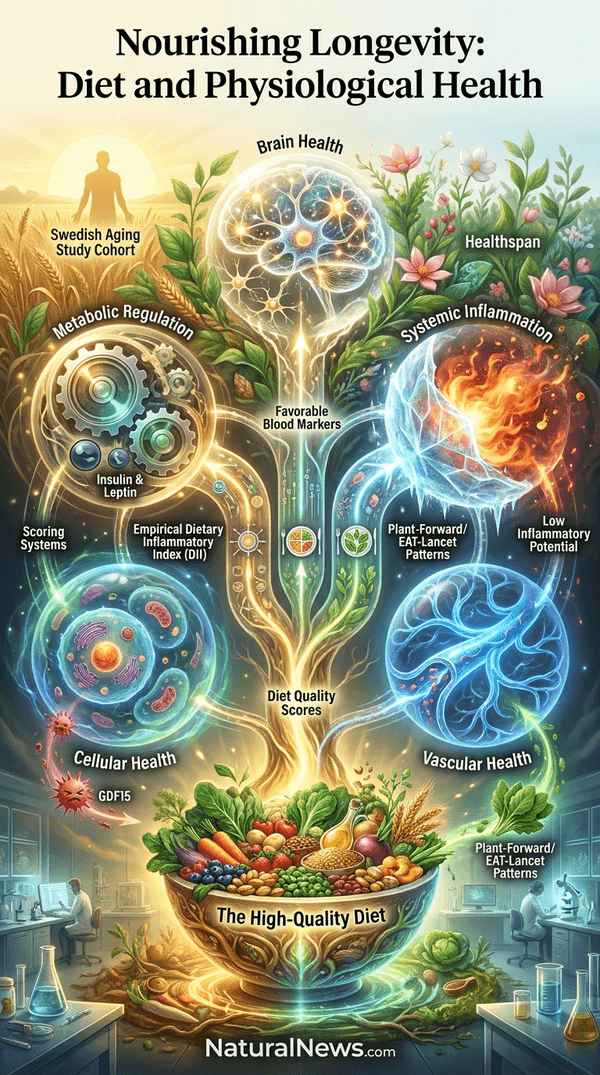
Researchers analyzed data from 1,769 adults ages 60 and older who were part of a long-running Swedish aging study. They compared three established diet-quality scores with 54 blood markers related to metabolism, inflammation, blood vessel health and brain health.
Study Design and Dietary Scores
The study used three scoring systems to capture different aspects of diet quality rather than asking whether each participant followed one specific diet. The Empirical Dietary Inflammatory Index looked at how strongly a person’s overall food intake was associated with inflammation. Participants received a score based on how closely their reported food intake matched each of these dietary patterns or characteristics.
Blood Marker Associations
The strongest associations differed depending on the dietary score.
People with higher scores on the reverse-transformed inflammatory index, which meant that their diets had lower inflammatory potential, had lower levels of insulin and leptin.
Two dietary scores also were associated with lower levels of GDF15. This protein rises when cells are under certain types of stress, including problems with how cells function and produce energy. Separate research has associated blood protein and metabolite profiles with adherence to plant-forward eating patterns, including the EAT-Lancet diet, according to a report on a study of 204,938 UK Biobank participants [2].
Limitations and Attribution
Researchers measured diet and blood markers at one point in time, so the study can identify associations but not cause and effect.
The study did not establish that dietary changes caused the observed differences in blood markers, researchers said.
Dietary Pattern and Practical Context
The report stated that people do not need to track 54 blood markers when planning meals. Instead, they can focus on foods that consistently feature in these eating patterns.
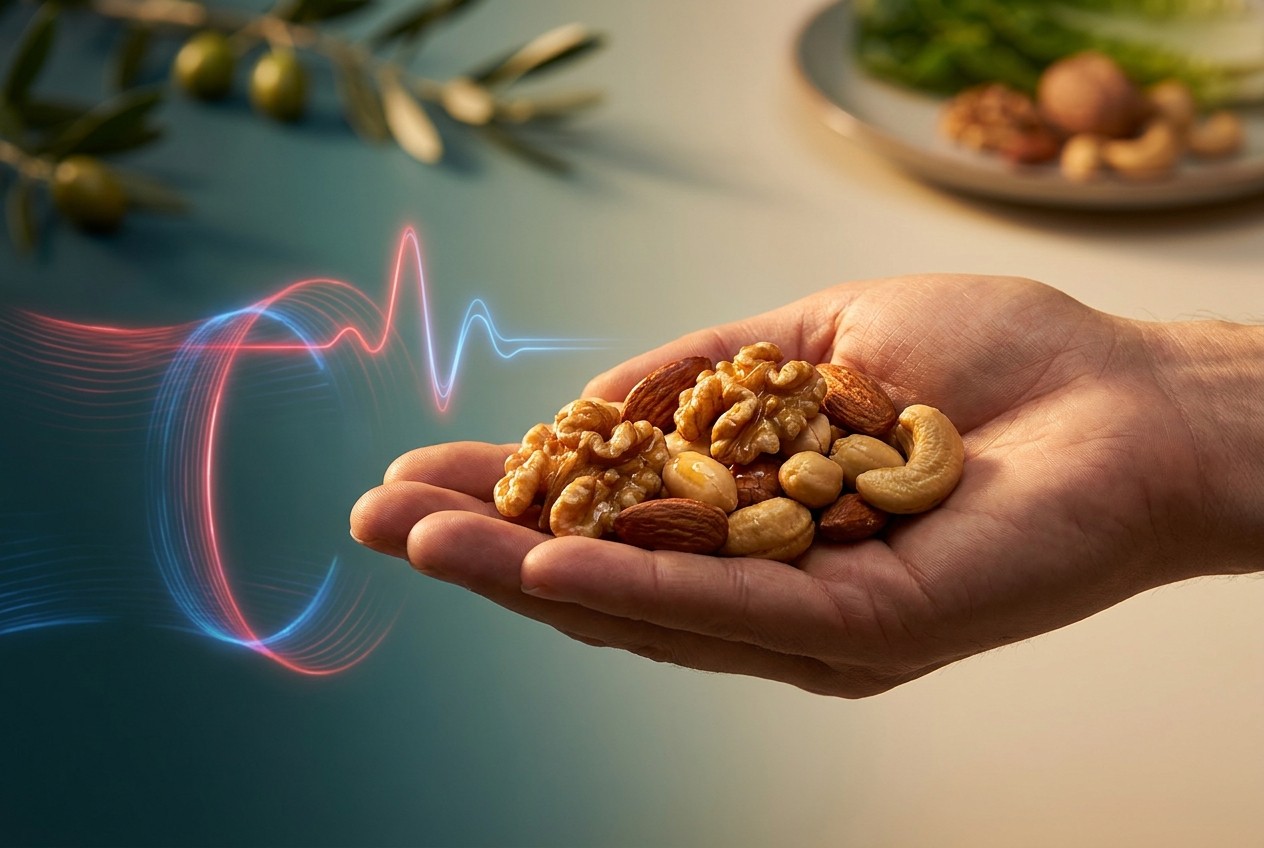
Other research has examined related dietary components. A meta-analysis of eight studies which included 20,665 participants found that a daily serving of nuts was associated with lower hypertension risk, though the researchers said the observational design cannot prove that nut consumption directly caused the reduced risk [3].
According to the article, healthy aging may have less to do with one specific food and more to do with overall eating patterns.
References
- Your Blood Has Some Interesting Clues About Your Diet & Longevity Outlook. https://www.mindbodygreen.com/articles/what-your-blood-may-reveal-about-your-diet-and-aging-over-time
- Blood markers linked to healthy eating may reflect more …. https://www.news-medical.net/news/20260928/Blood-markers-linked-to-healthy-eating-may-reflect-more-than-food-choices.aspx
- Daily Nut Serving Associated With Lower Hypertension Risk in Review of Eight Studies. https://www.naturalnews.com/2026-10-30-daily-nut-serving-linked-lower-hypertension-risk.html
Explainer Infographic
Submit a correction >>
Tagged Under:
aging secrets, blood vessels, brain function, brain health, diet, food cures, food is medicine, food science, health science, healthy eating, inflammation, longevity, men's health, metabolic health, nutrition, prevention, research, women's health
This article may contain statements that reflect the opinion of the author
RECENT NEWS & ARTICLES