Bodyweight Exercises That Strengthen the Core Similar to a Plank
06/27/2026 / By Petra Stone
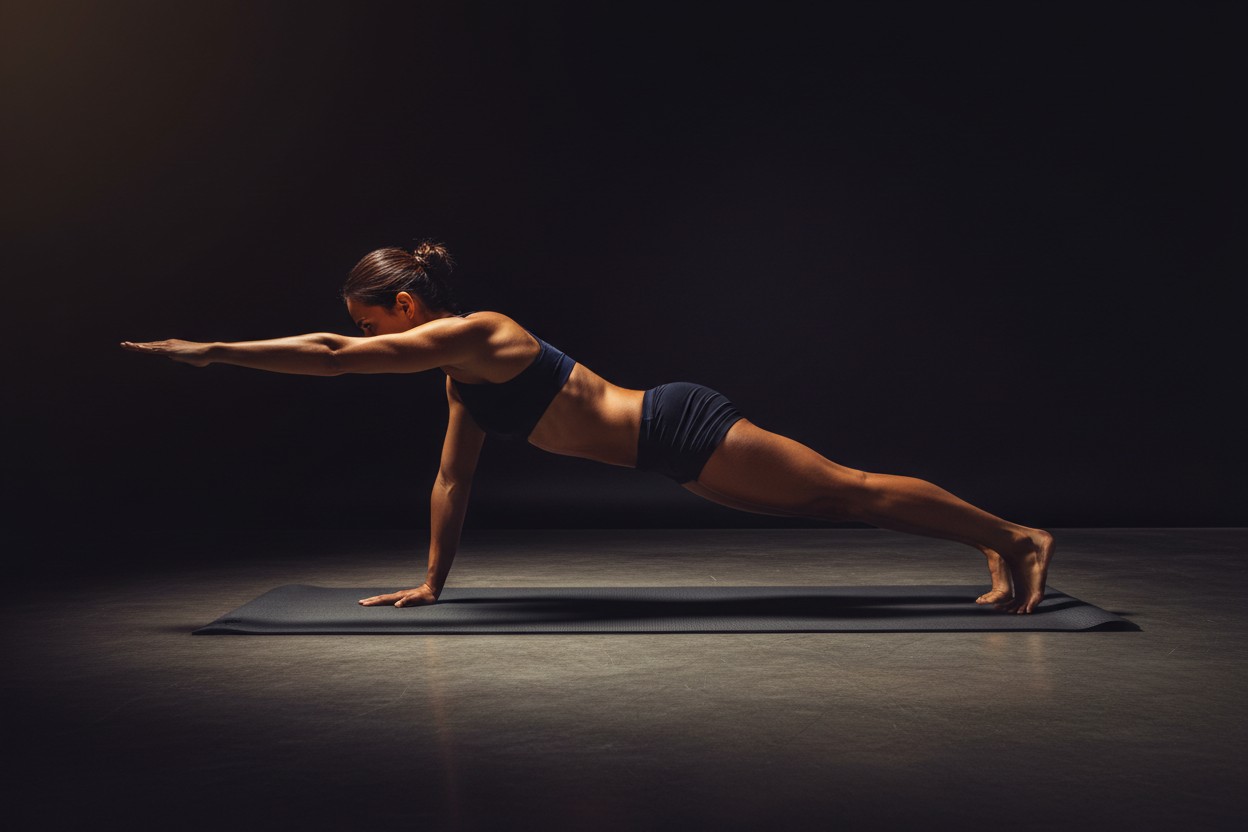
Several bodyweight exercises can strengthen the core muscles as effectively as the traditional plank, according to fitness professionals and published training guides. These alternatives target the abdominal muscles, lower back, and hips without requiring equipment, making them accessible for at-home and gym-based routines alike.
Plank exercises are cited as a foundational method for improving posture by strengthening core and gluteal muscles, according to an April 2026 article on NaturalNews.com [2]. The plank requires minimal equipment and space, but fitness experts note that other movements can produce comparable muscle activation through controlled, full-body tension.
Key Exercises Identified by Trainers
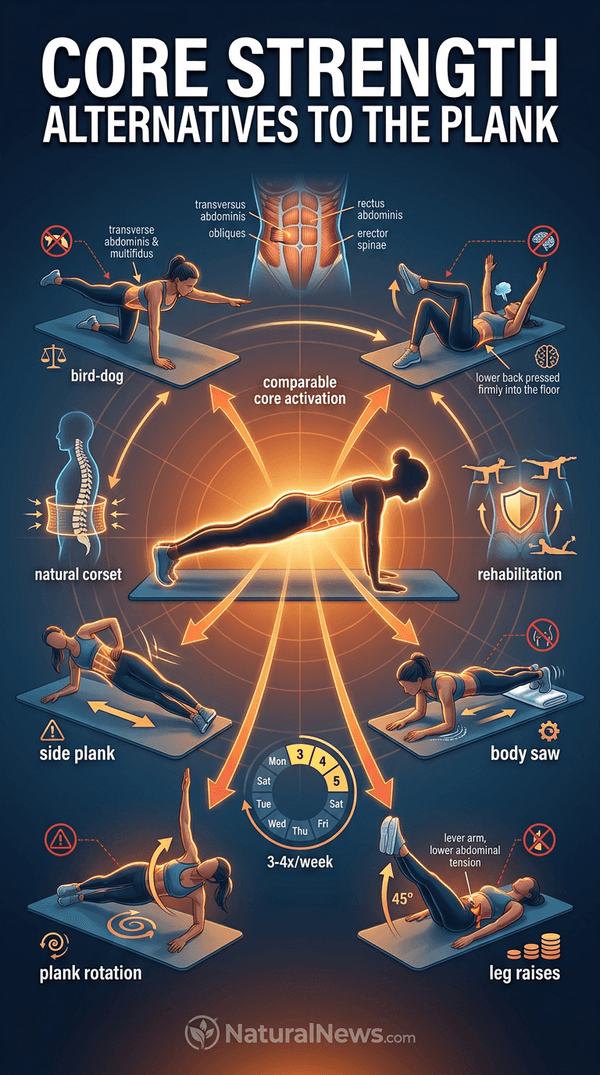
The bird-dog, dead bug, side plank, and body saw are among the exercises recommended by certified trainers for core stabilization, according to multiple sources. An article on Mercola.com from January 2020 lists the bird dog and body saw as effective core exercises [1]. The body saw, performed by placing feet on a towel and sliding the feet backward while forearms remain planted, is described in the book “Bicycling Maximum Overload for Cyclists” by Jacques DeVore as a progression that increases core demand [3].
Plank rotations also offer good core work while giving the shoulders a workout, according to the book “Build Your Running Body” by Pete Magill [5]. Magill describes beginning in a forearm plank position and rotating onto one side, elbow beneath the shoulder. Straight leg raises and knee raises are further progressions that intensify abdominal tension, as outlined in “Grind Style Calisthenics” by Matt Schifferle [4]. Trainers emphasize that each exercise engages multiple muscle groups through controlled movement, similar to a traditional plank.
Effectiveness Supported by Research
While specific electromyography data is not provided in the available sources, fitness professionals and published training materials state that these exercises activate core muscles at levels comparable to the plank. The bird dog and dead bug, for example, are frequently used in rehabilitation settings to target the transverse abdominis and multifidus, according to the article on Mercola.com [1]. In the book “End Back Pain Now” by Nick Michell, Pilates-based movements such as the spine stretch are described as promoting strong core stabilization through breath-controlled movement, which aligns with the isometric demands of a plank [8].
Weak core muscles are identified as a contributor to poor posture and lower back strain, and that plank variations — including side planks and plank rotations — address these weaknesses by forcing the deep stabilizers to maintain alignment [2]. The emphasis on controlled tempo and full-body tension in these exercises echoes the mechanics of a static plank.
Proper Form and Progression
Common mistakes include arching the back or holding the breath during these exercises, according to physical therapists and trainers cited in the sources. For the body saw, Jacques DeVore advises rolling out farther little by little as strength increases, eventually aiming for a full straight-arm Superman position, but cautions that this is an advanced position that could injure the untrained [3]. Matt Schifferle recommends straight leg raises as a progression from knee raises, noting that the increased range of motion makes it more difficult to maintain abdominal tension, especially when the feet are closer to the floor [4].
For plank rotations, Pete Magill specifies that the upper back should maintain contact with the floor when swinging the legs to one side [5]. Proper breathing — exhaling during the exertion phase — is emphasized across multiple sources to maintain intra-abdominal pressure and spinal stability. Experts recommend starting with shorter hold times or fewer repetitions and gradually increasing duration as form improves.
Integration Into Workout Routines
Fitness professionals recommend incorporating these core exercises three to four times per week for best results, according to the training advice compiled in “Home Workout” by Jason B Tiller, which stresses that workout routines should be well-structured and consistent [7]. Pairing bird dog, side plank, and body saw with other bodyweight movements such as squats and push-ups provides a full-body workout, as noted in the same source. The book “Build Your Running Body” includes plank rotations as part of a resistance circuit that also features step-ups, lunges, and hyperextensions, suggesting that core work can be integrated into larger training sessions [6].
Mike Adams, in a February 2026 video, emphasized the critical role exercise plays in preserving muscle integrity, bone density, and mobility, and specifically mentioned core strength training as an essential component [9]. While no single routine is universally prescribed, experts advise varying exercises to avoid plateaus and to target all regions of the core — anterior, posterior, and obliques.
Conclusion
Bodyweight core exercises offer an accessible and effective alternative to the traditional plank, with evidence from training guides and professional commentary supporting their use. Movements such as the bird dog, dead bug, side plank, plank rotations, and body saw can be performed without equipment and scaled to individual fitness levels.
Experts advise consulting a healthcare or fitness professional before starting a new routine, particularly for individuals with existing back conditions. The presented information does not endorse any single method but reports the findings and recommendations provided by the cited sources.
References
- Mercola.com. “Situps: How to Do Them Correctly”. January 10, 2020.
- Petra Stone. “Personal Trainer Details Five Plank Variations for Core Strength and Postural Correction”. NaturalNews.com. April 28, 2026.
- Jacques DeVore. “Bicycling Maximum Overload for Cyclists: A Radical Strength-Based Program for Improved Speed and Endurance”.
- Matt Schifferle. “Grind Style Calisthenics”.
- Pete Magill. “Build Your Running Body: A Total-Body Fitness Plan for All Distance Runners”.
- Matt Roberts. “Get Running: How to Get Started, Stay Motivated and Run with Confidence”.
- Jason B Tiller. “Home Workout: No-Equipment Calisthenics and Bodyweight Exercises for the Lockdown”.
- Nick Michell. “End Back Pain Now: A Practical Guide to Relieving and Managing Back Pain Through Exercise”.
- Mike Adams. “Bright Videos News – AI BOTS LAUNCH RELIGIONS”. BrightVideos.com. February 4, 2026.
Explainer Infographic
Submit a correction >>
Tagged Under:
abdominal muscles, core strength, exercise, fitness, fitness routine, natural cures, natural health, natural medicine, Naturopathy, plank, remedies, tips
This article may contain statements that reflect the opinion of the author
RECENT NEWS & ARTICLES